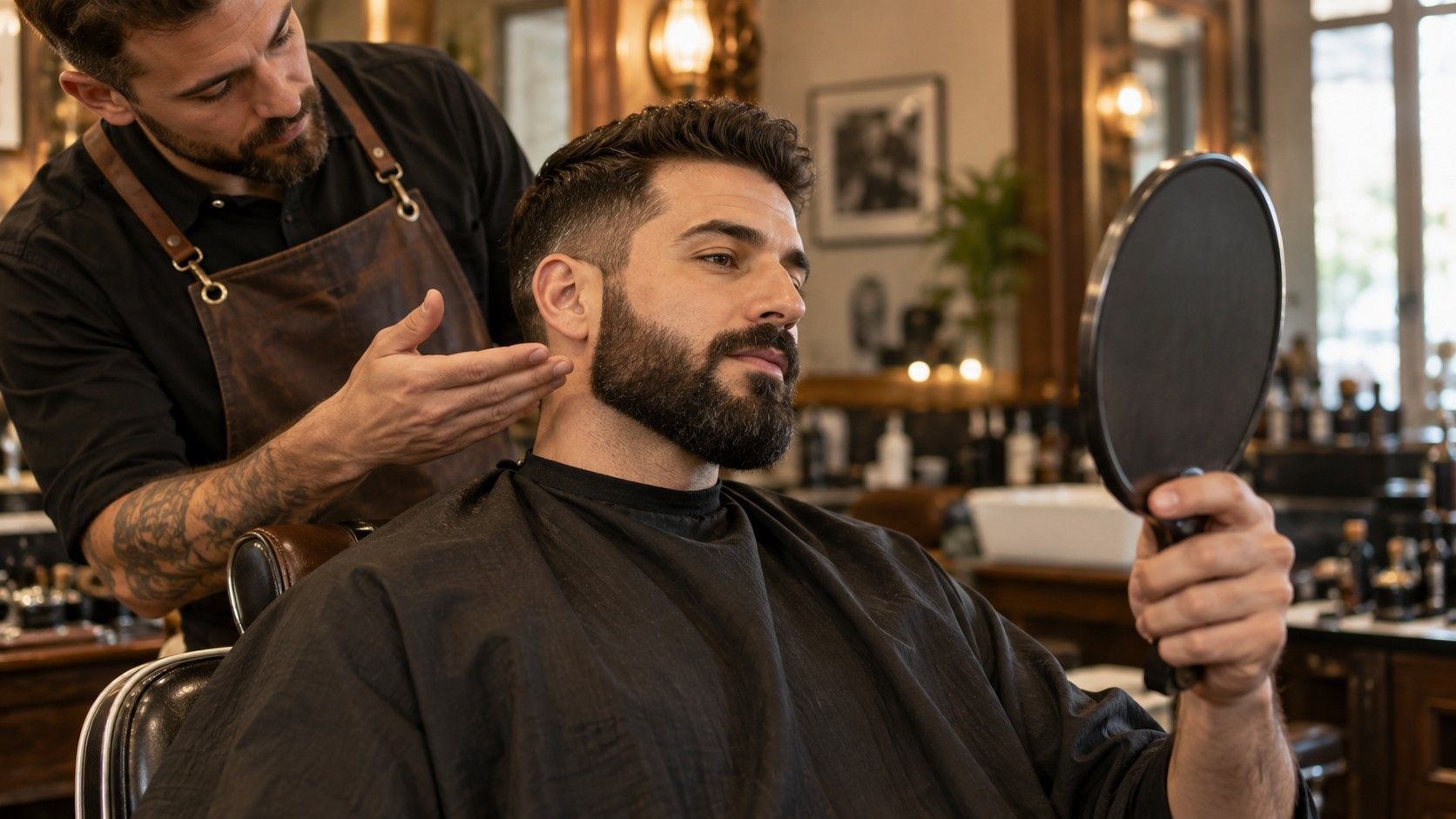
A triangle face shape usually describes an outline that looks narrower at the temples and wider toward the jaw. You may also see it called a pear face shape. Neither term requires a pointed triangle or perfectly straight edges. The useful question is whether the lower face stays visibly broader when hair, camera angle and expression are taken out of the comparison. From there, you can decide where you want volume, which features you like to leave open and how to explain that preference at a haircut consultation.
Compare the jaw with the temples in one clear view
Use a level mirror and move the hair away from both sides of your face. Let your jaw rest and keep your chin in a natural position. Look first at the outer width near the temples, then at the widest visible part of the lower jaw. With a triangle-like outline, the lower area often appears broader while the upper sides look more tucked in. It is an overall impression, rather than a requirement that every feature follow a geometric line.
Check the cheekbones as a separate level. If they are the widest part, the outline may need a different description, or it may combine features from several categories. Do not treat cheek fullness as a measurement of jaw width. Follow the outer edge down past the cheeks, noticing whether it continues outward, stays relatively straight or turns inward toward the chin.
A front-view photo can help if the mirror comparison feels fleeting. Keep the camera around eye level, farther from your face than a close selfie, and crop afterward. Use even light so one side is not lost in shadow. Repeat the view on another occasion before deciding that a small difference in apparent width must define your shape. A tilted head can be enough to change what seems prominent.
Make sure the label means what you think it means
Shape names are not used consistently across every styling chart. Some diagrams use “triangle” for a wider lower face; others show an inverted triangle with more width at the forehead and a narrower chin. Read the description beside the picture. If you are discussing a haircut, saying “my jaw looks wider than my temples” removes the ambiguity immediately.
A pear face shape is generally used for the narrower-upper, broader-lower description, though the drawings may show softer curves than a triangle chart. That difference in illustration does not mean your jaw must have sharp corners to count. You can have a broad lower outline and a rounded transition toward the chin. Use the term that helps you communicate, while keeping the actual features in view.
You also do not need to identify a single permanent category before trying a style. Hair can cover the temples, a fringe can hide the hairline and a beard can become the visible lower boundary. The label is a shorthand for a particular view. A plain description of that view is useful even when two charts give different names to it.
Distinguish a wider lower face from a square outline
Both descriptions may include a noticeable jaw. The distinction is often what happens above it. With a square-looking outline, the forehead and lower sides can feel relatively similar in breadth, with straighter sides and a visible turn near the jaw corners. A triangle-looking outline emphasizes the contrast between a narrower upper area and a broader lower one. There is no numerical threshold you need to cross.
| Observation | What it helps you describe | What to check next |
|---|---|---|
| Jaw looks broader than temples | A triangle-like width pattern | Move hair off the upper sides |
| Forehead and jaw look similarly broad | A more square-like outline | Follow the direction of the sides |
| Cheekbones appear widest | A different or mixed width pattern | Compare cheeks with both forehead and jaw |
| Only a beard creates lower width | The current styled outline | Separate beard shape from the visible face |
Use the table as a way to organize observations, rather than awarding points. You may notice narrower temples alongside a jaw that has distinct corners. “Triangle-like proportions with an angular jaw” conveys both details. Forcing the result into a square drawing would lose the width contrast; forcing it into a softly rounded pear drawing might lose the corners.
Length adds another dimension. Two people can share a broader lower face while one outline looks longer overall. A haircut chosen only from a width diagram may add more height than you want. Look at the whole face again once you have compared the three widths, and note whether your intended styling change would affect apparent length as well.
Separate the outline from hair and facial hair
At the temples, dense hair or lifted side sections can make the upper part of the head look wider. Flat hair or a tight pullback can expose a narrower upper outline. Try both an open view and your normal hairstyle. The first helps you compare facial proportions; the second tells you what you and other people actually see in daily life.
A beard can add width close to the jaw, extend the visible chin or cover the transition between them. If you wear one, describe the outline with it in place and note which edges come from grooming. You do not have to remove it to make a styling decision. You do need to avoid treating the beard’s outer edge as evidence about the face hidden underneath.
Lighting deserves a separate check. Deep shadow under one jaw corner may make that corner look stronger, while bright light over the forehead can make the upper face harder to judge. Compare in soft, even light before adding contour makeup or using a filter. The aim is a recognizable reference view, not a photograph stripped of every trace of ordinary life.
Try volume where you actually want it
If you would like more visible width near the upper sides, experiment with hair around the temples before asking for a new cut. Loosen a tightly tucked section, change the part or lift a small area near the sides. Look at the front and then turn slightly. Hair texture and growth direction will decide how easily that shape holds, so a mirror experiment is a starting point for discussion rather than a finished result.
You might prefer the jaw to remain the strongest horizontal feature. In that case, an open hairstyle can be exactly what you want. There is no need to conceal it because a chart uses the word “balance.” Choose whether you want to repeat the existing proportions, add contrast or simply make the hair easier to manage. Those are different goals and can lead to different cuts.
For glasses, compare how a stronger upper rim and a quieter rim change the emphasis around the eyes. Keep the overall size and fit reasonably similar while you compare; otherwise you may be reacting to width or slipping rather than the rim itself. Ask an optician to check bridge contact, temple comfort and the frame’s suitability for your lenses. Shape preference comes after a pair can sit comfortably.
Consider the effect of earrings or a neckline in the same practical way. A long, narrow earring creates a different line from a broad hoop, but neither is assigned exclusively to one facial outline. Try the item with the hairstyle and clothes you expect to wear. An isolated face diagram cannot show that combination, and it cannot tell you which effect you will enjoy.
Describe the result before booking a haircut
Take a photo of your usual hair and one with the sides moved away. Write a short description: narrower at the temples, broader through the jaw, rounded chin, or whatever you actually observe. Then add what you want to change. “I want some movement above the cheeks without extra height at the crown” is a more useful request than asking for the standard triangle-face haircut.
Bring a reference image for the detail you like, and point to that detail. It may be the position of a layer, an open area around the jaw or the way a fringe breaks up the forehead. Ask how that detail would behave with your texture and everyday routine. A style that depends on a different growth pattern may need adapting, even when the reference face looks similar.
Keep the description flexible. If a new hairstyle makes the upper outline feel wider, that does not mean your original observation was wrong; it means the visible arrangement changed. The triangle face shape label has done enough when it helps you notice that relationship and make a choice you can explain. You can leave the final category unsettled and still have a clear plan.