A fringe changes what you see around the forehead, brows and cheeks, so face shape is a reasonable place to start the conversation. It is only part of the decision. A cowlick, the way your hair dries and the time you will spend styling it can matter more than the outline on a chart. Choosing bangs for face shape works best when you decide what effect you like, then check whether your hair and routine can support it.
Watch how the front of your hair behaves
Before choosing a reference picture, look at the front section of your hair after an ordinary wash and dry. Notice where it naturally separates, whether it lifts away from the forehead and whether it falls straight or bends. A strong parting or cowlick can keep reopening a fringe that looks solid in a carefully styled photograph.
Show that behaviour to your stylist instead of arriving with the front section heavily pinned or smoothed into a different position. Explain what you normally do after washing it. If you air-dry most days, say so. If you are willing to use a dryer every morning, that creates a different set of possibilities, although it does not make every reference style suitable.
Hair density affects how much hair is available for the fringe and how substantial it looks. A dense blunt section and a light, separated fringe use different amounts of the front hair. Taking a deeper section may also change the hair left around the sides. Ask to see the proposed section before the cut begins, particularly if you want to preserve fullness elsewhere.
Texture needs the same attention. Wavy or curly hair may sit differently when dry from how it looks while stretched or wet. Discuss the intended dry length and how the fringe will be cut and checked. A photograph of straightened bangs is an unclear reference if you intend to wear your natural curl pattern most of the time.
Decide where you want the edge to fall
The ending point of a fringe creates a visible boundary. An edge above the brows leaves them clear; a longer fringe can overlap them; side pieces may lead toward the cheekbones or farther down. Look at these relationships in your own mirror. You are choosing where to place a line of hair, not changing the structure of your face.
If you describe your face as long, you may like the way a fuller fringe occupies some of the visible forehead area. You may also prefer an open forehead and a longer overall silhouette. Both choices are coherent. Explain which appearance you want instead of asking the stylist to make a category disappear.
With a broad upper face or prominent cheekbones, the point where side pieces end can be more relevant than the length in the centre. Pieces that stop beside the cheeks create a different outline from ones that continue toward the jaw. Use your fingers or existing front layers to indicate the positions you want to compare. Ask how those pieces will behave when you tuck the rest of the hair behind your ears.
Think about the brow and eye area during movement. A fringe may sit neatly in a still photograph yet fall into your eyes as you look down. Glasses add another boundary: hair can rest on the top rim, split around it or be pushed up when you put the glasses on. Bring your usual frames to the appointment and check the length with them in place.
Compare fringe styles by what they ask of your hair
Names such as curtain bangs, blunt bangs and side fringe describe broad ideas rather than fixed cuts. Reference photographs help, but talk through the amount of hair, the centre length and the side lengths separately. Two people can ask for curtain bangs and leave with quite different results because the opening and the shortest pieces were interpreted differently.
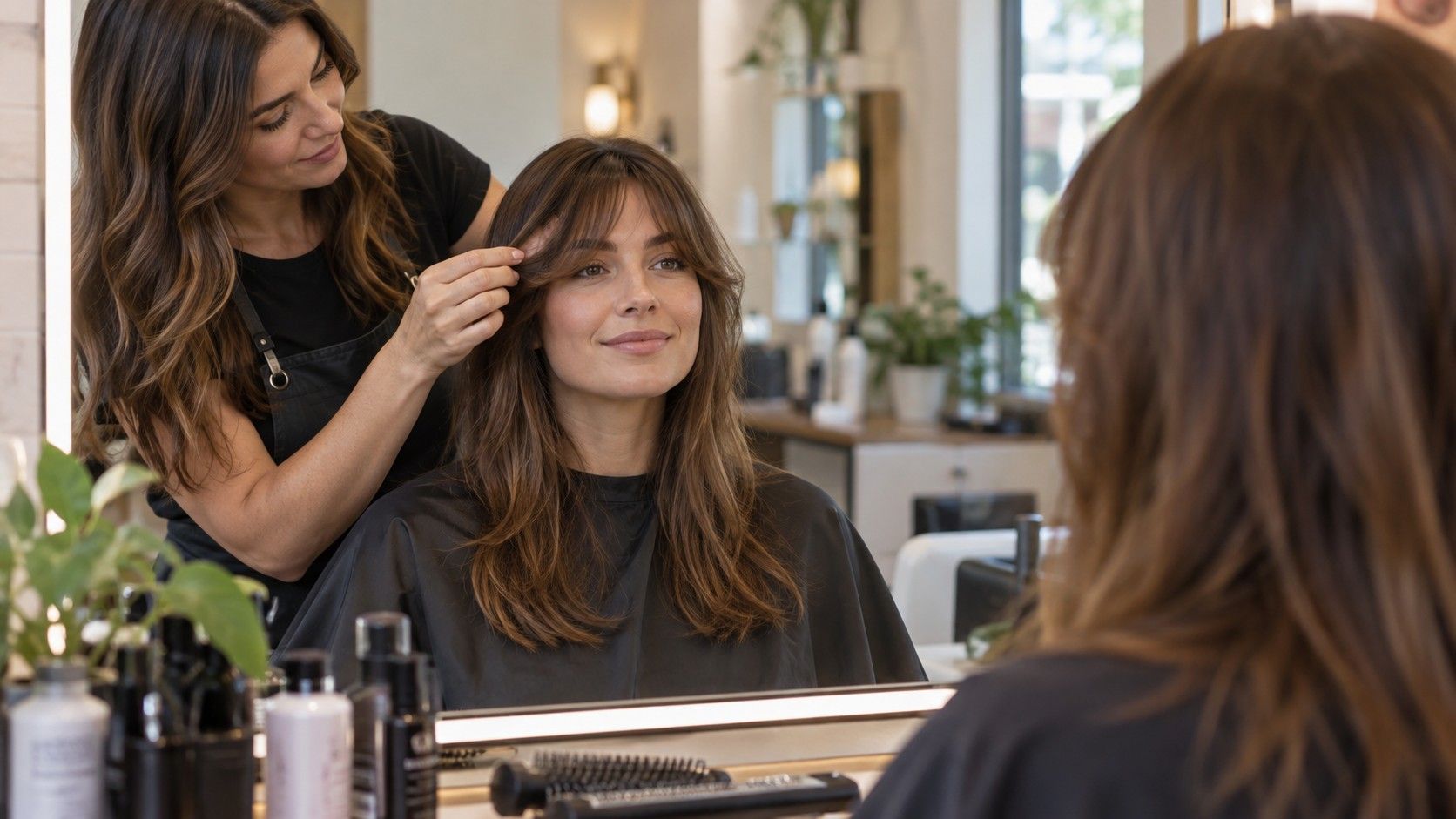
Curtain bangs create a centre opening and frame the sides. Check whether your natural part supports that opening and ask how the sides will be styled. A blunt fringe creates a more continuous edge across the forehead; its behaviour depends on the density and any cowlick at the front.
A side fringe creates a diagonal sweep. Discuss whether your growth direction supports the chosen side. A light, separated fringe leaves gaps, so consider how those strands will sit later in the day. Long face-framing pieces keep the forehead more open; check whether the shortest sections can tuck away when you need them to.
For a useful comparison, keep the rest of the haircut reasonably similar in the references. A short blunt fringe on a cropped bob and long curtain bangs on layered hair change several things at once. You may love the whole photograph without wanting the fringe on your current cut. Point out exactly which part you want to borrow.
A side fringe is not automatically low maintenance, and curtain bangs do not automatically fall into place. Their behaviour depends on the cut and your hair. Ask the stylist to show you the movement needed to create the finish in the reference. If the answer involves tools or daily effort you will not use, choose a different version before the scissors come out.
Discuss the ordinary morning, not just the salon finish
Describe a real morning: how long you have, whether you shower before leaving, and what tools are within reach. A fringe can need attention even when the rest of your hair is tied up. If you want to wash and leave it alone, make that a clear requirement. The stylist can then discuss which lengths and openings are more compatible with your starting point.
Ask for a demonstration you can repeat yourself. Watch how the front section is dried, where the airflow is directed and what happens at the parting. Take note of the basic steps rather than assuming the finished look is simply the haircut. You can ask to practise a movement while still in the chair, especially if you are unfamiliar with a dryer or brush.
Clarify the trimming plan. How soon will the chosen edge begin to obstruct your view or lose the shape you like? The answer depends on the starting length, your growth and how exact you want the line to remain. Ask about the salon's fringe-trim arrangements and likely cost, rather than relying on a universal maintenance schedule.
Think through your usual activities as well. A fringe may be pushed aside by a helmet, caught under a hat or become inconvenient while exercising. Ask whether the shortest pieces can be clipped away, and what that looks like with your usual hairstyle. Those are small details in a salon discussion and large details when they recur every day.
Try the outline temporarily and explain its limits
You can pin longer front sections into an approximate fringe or use a clip-in piece to explore forehead coverage. The exercise is useful for comparing an open centre with a fuller edge and for checking how you feel with your brows partly covered. It does not show exactly how a freshly cut section of your own hair will grow or fall.
Match the temporary piece to the effect you are testing. A thick clip-in fringe may exaggerate density, while hair folded forward from the crown may have the wrong direction of growth. Treat the result as a sketch. If it feels wrong, identify whether the problem is the length, the fullness or the artificial match before abandoning every version of bangs.
Take photographs from a consistent distance with a relaxed expression and your normal clothes. Include glasses if you wear them. Avoid a smoothing filter or a camera angle from high above: both can make the comparison less representative. A short video of turning your head can reveal whether you keep reaching to move the hair out of the way.
Save a small set of references with clear notes. One might show the centre opening you like, another the side length, and a third the amount of forehead coverage you want to avoid. This is more actionable than collecting many photographs labelled with your face shape. Your stylist can discuss what can be combined and what would conflict.
Agree on a version you can live with as it grows
Before cutting, repeat the agreed length, section and maintenance expectations in plain language. If you are uncertain, discuss whether a longer first version would let you assess the movement before shortening it. Longer does not solve every cowlick or density issue, but the starting point should reflect your comfort with the commitment.
Ask how the fringe can blend into the rest of the cut during a grow-out. Long side pieces may be easier to tuck, while a very short centre has to gain length before it can be swept away. There is no need to choose the most dramatic reference in the folder. A smaller change can still give you the forehead framing you wanted.
When choosing a fringe for face shape, keep the final decision attached to visible details: where the edge ends, how much of the forehead shows, how the sides meet the cheeks and what happens with your natural texture. If you like those relationships and accept the upkeep, the label on a face-shape chart has done all the work it needs to do.