A wide face can look square in one picture and round in another, especially when the lighting changes. Cheek width alone cannot separate the two. In a square vs round face comparison, look at the direction of the sides and the transition around the lower jaw, then check whether the same impression holds in an ordinary front view. The result should help you explain a styling preference, even if your outline combines curves with a few clearer corners.
Look at the lower corners without posing
Pull your hair away from the sides and look straight into a level mirror. Relax your mouth instead of pressing your lips together, and let the jaw rest without deliberately clenching. Look below the ears, where the sides of the face turn inward toward the chin. A square-looking outline tends to show a more distinct change of direction there. A round-looking outline tends to turn through a smoother curve.
Do not make the chin carry the whole decision. A rounded chin can appear below a clearly angled jaw, while a smaller chin can sit within an otherwise curved outline. Follow the edge on each side from the cheek area toward the chin, noticing the transition as a whole. You are describing what is visible, rather than trying to infer anything beneath the surface.
A slight turn of the head may help you see where the jaw edge runs, but return to the front view before deciding. A three-quarter portrait emphasizes one side and hides part of the other. I would use it as a supporting view, much as I would check the side of a glasses frame after first seeing how the pair sits from the front.
Check width at three heights
Compare the forehead, cheek area and lower jaw in the same view. A square description often fits when the sides feel relatively straight and width remains noticeable toward the jaw. A round description often fits when the widest area flows into curved sides that narrow toward the chin. Real faces rarely reproduce the neat geometry of a chart, so treat these as directions to look rather than required features.
Forehead width is easy to misread when hair covers the temples. Move those sections aside gently and identify the visible boundary of the face. Do not include a puff of hair beside the head or compare the width of a fringe with the width of the jaw. Hair is part of your overall appearance, but separating it briefly makes the underlying comparison less confusing.
You can make light marks on a copy of a photo if it helps you focus. Keep the marks approximate and avoid turning small differences into a calculation that claims to settle the label. There is no need for a numerical cutoff. If the lower face stays broad but its corners are soft, “broad jaw with curved edges” says more than forcing a choice between two words.
Repeat the check when shadows disagree
A lamp placed to one side can draw a sharp dark edge along the jaw. Flat light may make the same area look much softer. Try a front view in even daylight, avoiding direct sun on one cheek and deep shade on the other. If the angular impression disappears when the light changes, keep that in mind before treating a single photograph as a reliable map of your outline.
Camera distance and head position also matter. A phone held close to your face changes perspective, while a tilted head alters which edges are visible. Place the camera farther away, use a timer if convenient and crop the image afterward. Match the camera height and expression when you compare two pictures. Consistency is more useful here than a particular app filter or a more expensive camera.
A beard, contour makeup or a hairstyle covering the jaw can create a convincing outer line of its own. Decide which question you are answering: the visible outline you wear every day, or the face with those styling choices set aside. Both can be relevant. Just do not compare a heavily shaped beard in one image with a clean jaw in another and assume the change proves the original classification was wrong.
Separate observations from styling rules
The comparison below keeps the focus on what you can actually see. It is not a checklist in which the most ticks win. You might have a broad forehead, curved cheeks and a noticeable jaw angle at the same time. That combination is useful information for a haircut or a frame fitting, even when it resists a tidy category.
| Area to compare | More square-looking | More round-looking |
|---|---|---|
| Lower sides | A clearer turn toward the chin | A more continuous curve |
| Overall side line | Relatively straight through more of the outline | Curvature draws more attention |
| Width near the jaw | Often stays visually prominent | Often narrows through a curved transition |
| Unhelpful shortcut | Calling every wide jaw square | Calling every full cheek round |
Charts often jump from a shape label to instructions about what you should disguise. You can choose a different goal. Perhaps you like a visible jaw angle and want a haircut that leaves it open. Perhaps you enjoy the curves of your cheeks and want frames that repeat them. Adding contrast is an option, not an obligation, and a successful choice does not have to change the apparent shape at all.
With glasses, compare a curved frame and a straighter frame in a similar size before deciding which outline you prefer. If one pair is much wider or sits lower on the nose, the difference you notice may come from fit rather than shape. Check comfort at the bridge and temples, whether the frame slips and whether the lenses sit where you need them. Those details remain relevant whichever label you use.
Choose where you want softness or definition
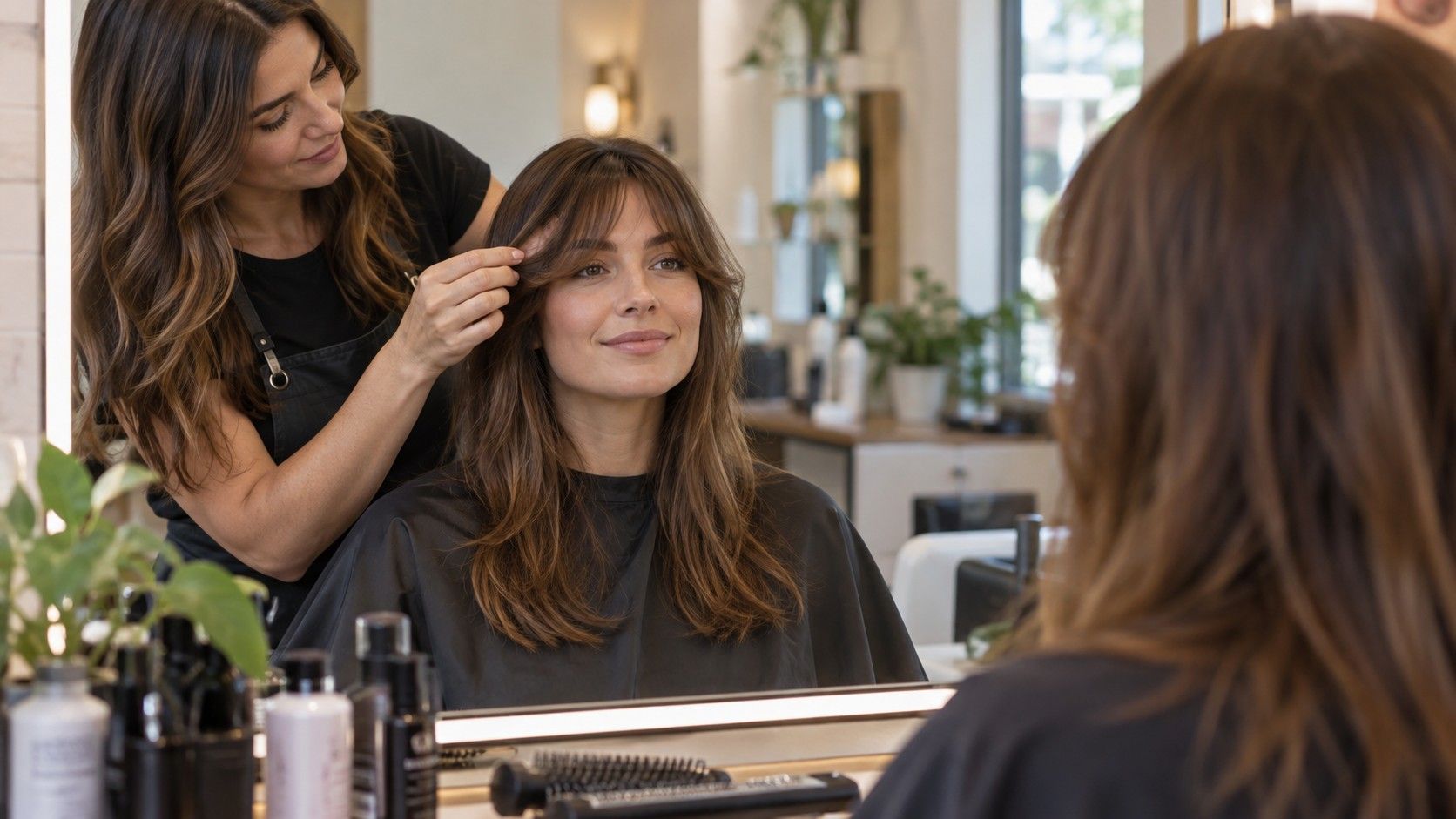
At the mirror, release your hair and notice where it ends. A blunt edge near the jaw draws attention to that level; longer sections may frame the lower face differently. Waves, curls and straight hair produce different outlines even with a similar cut length. Instead of asking which haircut belongs to a square or round face shape, ask where you want the eye to pause and which parts you want to leave visible.
Try tucking one side behind an ear, then both, and compare the amount of jaw you can see. Shift the part if your hair allows it without a fight. These small experiments can tell you whether you prefer an open outline or some movement beside the cheeks. They will not reproduce the result of a cut, but they are a practical way to start a conversation without making an irreversible change.
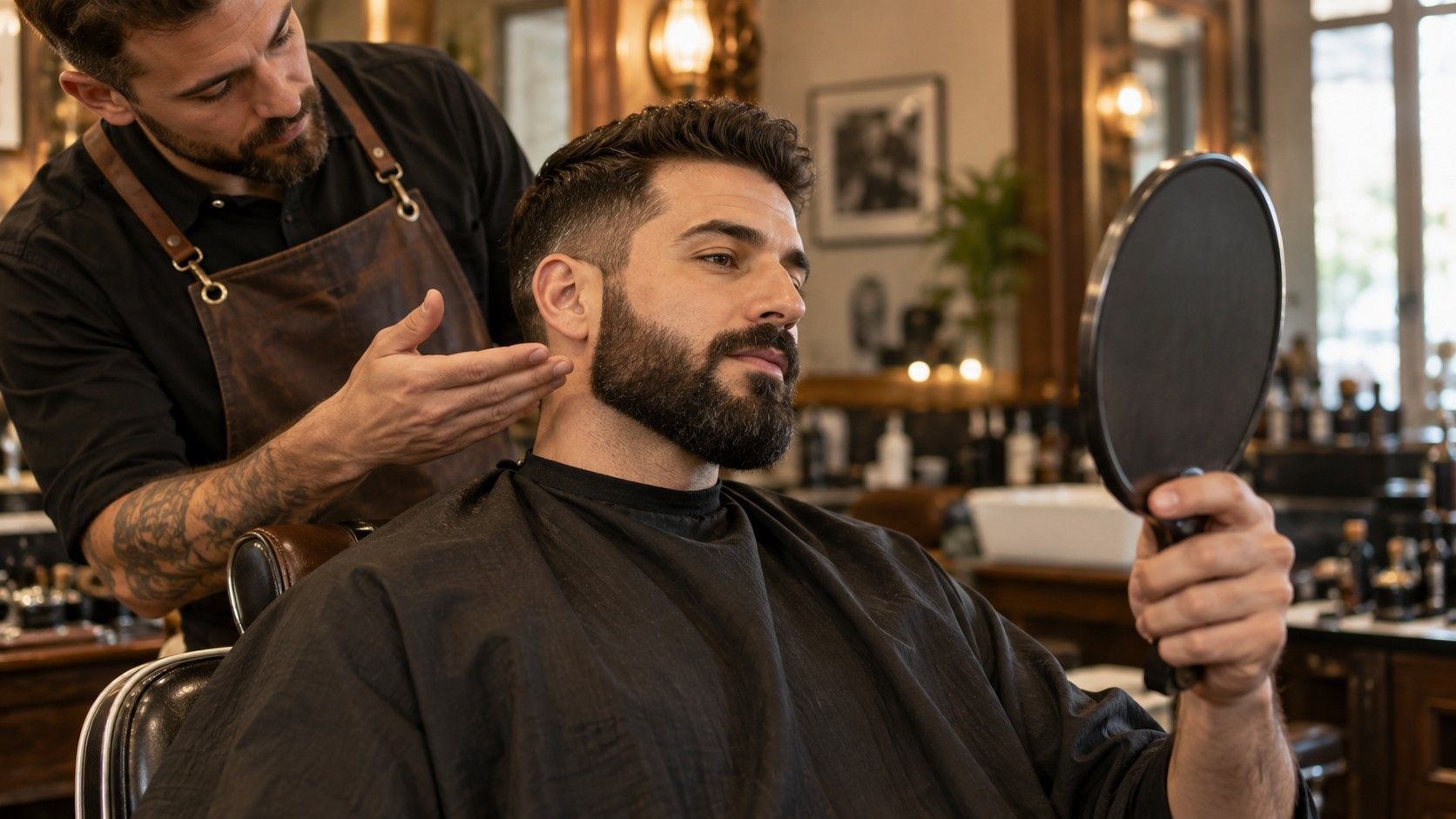
Facial hair creates another styling choice. A beard with a more defined lower edge can make an outline appear more angular; a softer edge can preserve a curved impression. Growth pattern, comfort and the amount of upkeep you want will limit what is practical. Describe the effect you want to a barber and discuss what your existing growth can support, rather than selecting a diagram and expecting an exact copy.
Keep your usual routine in the picture. If a proposed shape depends on blow-drying the sides every morning, try the styling approach before committing to the cut. If you usually air-dry, bring a photo showing that texture. The result needs to make sense on an ordinary day, when you have neither special lighting nor much time to adjust it.
Take a clear request to the consultation
Bring a front-view photo with the hair away from your face and a second photo showing how you normally wear it. Add a reference for the haircut or frames you like, then explain the specific detail that appeals to you. “I like the jaw left visible, but I want movement near my cheeks” gives a stylist more to work with than “I think I am square.”
If you remain between labels, say so plainly. You can describe relatively broad sides with softened jaw corners, or curved cheeks above a more defined lower edge. Ask how a proposed length, fringe or frame would interact with those features. A useful consultation should also consider hair texture, fit, growth direction and maintenance; the outline is one part of that discussion.
Keep a short note of what you tried and why you preferred it. A photo in the same light helps separate a successful styling choice from a flattering camera angle. You do not need to settle the square vs round face question permanently. Once the comparison helps you choose a comfortable frame or explain the cut you want, it has done its job.