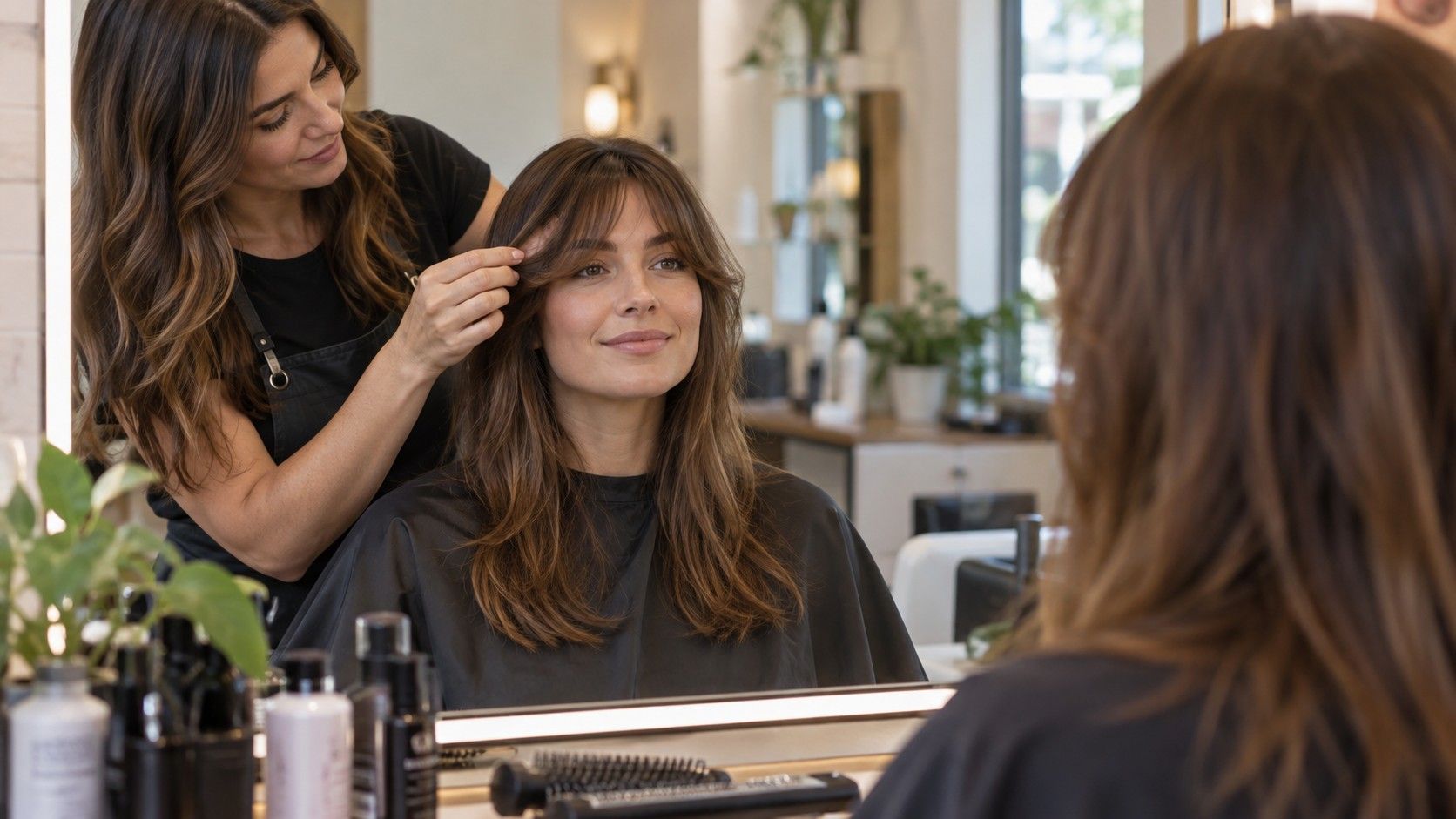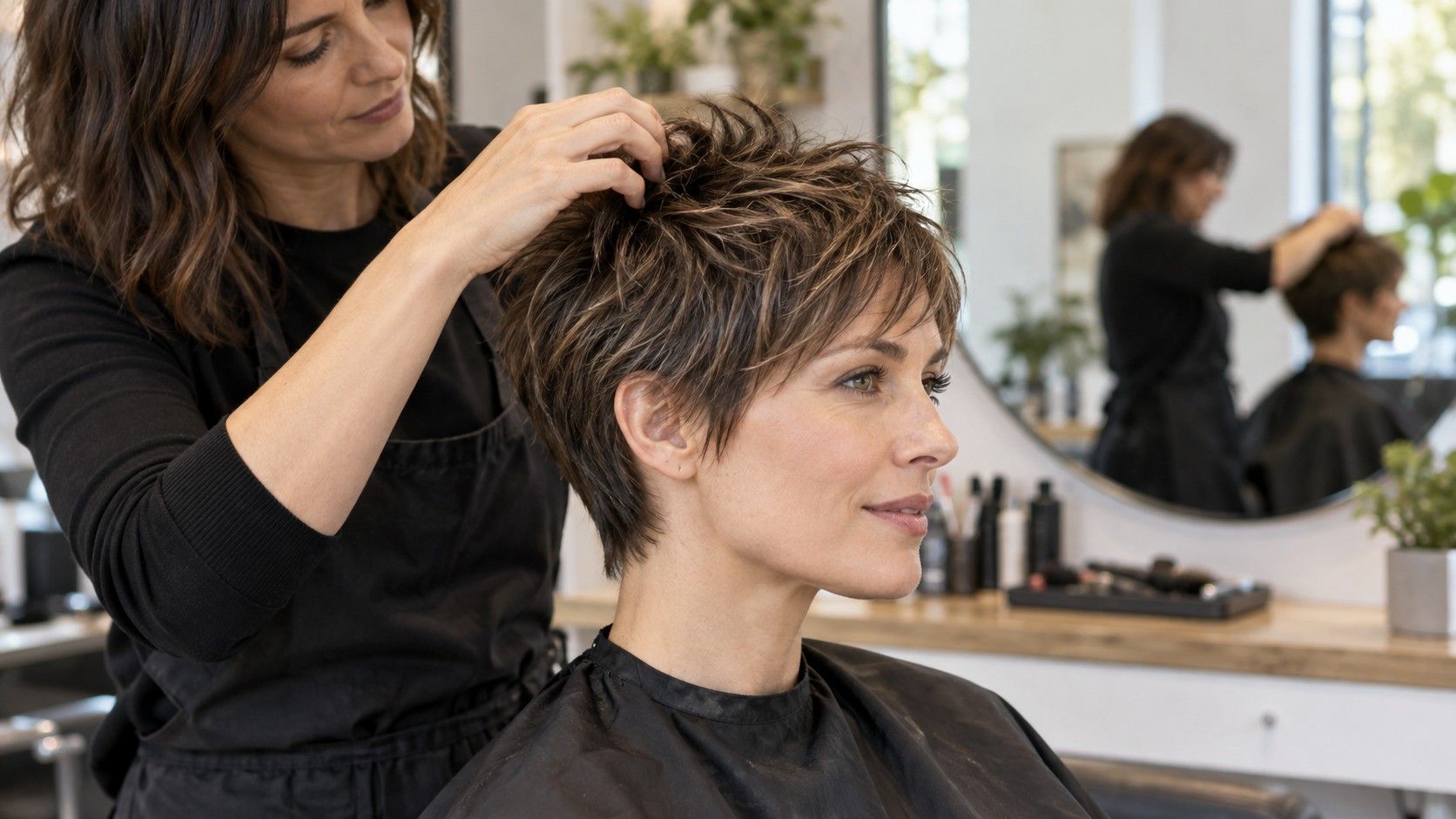
A photograph labelled pixie can show closely cropped sides, a long swept fringe, a rounded crown or an almost uniform crop. Those cuts frame the face differently despite sharing a name. When choosing short hair for face shape, start with the outline you want to see around your forehead, temples and jaw. Then ask whether your texture, growth patterns and ordinary routine can support it. A face-shape label is useful background for that conversation, not permission to have short hair.
Choose what the silhouette should do before naming the cut
Look at a reference photograph beyond the face in the middle. Where is the hair widest? Does the crown rise above the head, do the sides sit close, and is the forehead exposed? A narrow crop with height creates a different silhouette from a rounded short cut with a low crown. Save the picture for those specific features rather than assuming the whole result transfers from one person to another.
Your own outline gives you a place to start. You might want more visible width near the temples, more height above the forehead, or hair that follows the head closely. None of these choices is assigned automatically to round, square, oval or heart faces. A person who enjoys a broad jaw may want it fully visible; someone else may prefer softer framing around it.
Try pulling the sides back while leaving the top loose, then flatten the top and release a little hair around the temples. These rough arrangements will not reproduce a haircut, but they can help identify a preference. Check the mirror from the front and side. Short cuts have a back profile too, and a reference that looks good only from one carefully chosen angle leaves a lot unexplained.
Write down the part you like in plain language: open ears, a fringe that moves sideways, a rounded outline, or little height on top. This is more useful than bringing a category such as pixie cut face shape into the salon and expecting it to describe the finished cut.
Put crown and side volume where you want to see it
Crown volume draws attention upward and can add vertical emphasis. Close sides make that contrast more visible. If you like this effect, compare references with a similar top length and ask how the height is created. Hair that stands up naturally and hair lifted with a brush and product involve different morning routines.
For a less tall outline, explore a lower crown and some shape at the sides. Side volume can be subtle: a small bend at the temple, a rounded layer or a little length above the ear. It does not have to mean a wide, rigid silhouette. Check where the volume falls in relation to your cheekbones rather than treating all fullness beside the face as equivalent.
Density affects the result. A reference with thick hair may hold a rounded outline that finer hair will not reproduce in the same way. Dense hair can also feel bulky if length collects in the wrong place. Ask the stylist where weight will remain and where it will be reduced, especially around the sides and the back of the head.
The useful question is how the cut behaves after your usual drying method. If you air-dry, say so before discussing a lifted crown that depends on a blow-dry. If you enjoy styling, explain the tools and products you are willing to use. There is room for both approaches, provided the planned outline matches the work you want to do.
Decide how the fringe and sideburns will frame your face
The front of a short cut can be a tiny cropped fringe, a long section swept across the forehead, or an open hairline. Each changes how much forehead is visible. Look at where the fringe ends and whether it connects into the sides. A long front with very short sides can look quite different when it is pushed back, so ask to understand both wearing options.
A cowlick or a strong natural part may affect how the fringe sits. Show the stylist your hair before forcing it into the reference shape. It is easier to plan around the growth direction than to discover afterward that the front separates every morning. Curly or wavy fringes also need to be discussed in their dry state, when their actual shape is visible.
Sideburns deserve their own decision. A tapered point, a soft edge and a squared finish make different marks beside the cheek. You can keep a little softness near the ear without keeping the whole side long. If you wear glasses, place them on while discussing this area: the arms may lift a longer section or leave it sitting awkwardly above the ear.
Check practical details too. Hair that repeatedly falls into your eyes, catches behind your frames or needs pinning may bother you even if the photograph looks right. Tell the stylist whether you want to tuck the sides, expose the ears or move the fringe off your face during work. These are design requirements, not small afterthoughts.
Plan the nape and the grow-out before the first cut
A cropped nape can make the back feel tidy and open, while a softer nape leaves a different edge against the neck. Look at the neckline in a rear-view reference, not just the front portrait. Natural hair growth may be uneven there, and a very sharp outline asks for a different upkeep pattern from a deliberately soft finish.
Ask how the cut will look as it grows. A short style does not necessarily require much daily effort, but keeping its original proportions may involve regular appointments. Decide which change would bother you first: extra hair over the ears, a heavier fringe, less crown shape or a nape that loses its clean edge.
Work around the head in a consistent order during the consultation. Settle the crown height, then the width at the temples, then the fringe and sideburn edges. Finish with the nape. At each point, ask what creates that shape after washing and which part will change first as the hair grows. This keeps an attractive front view from hiding a back or side detail you would rather change.
If you are moving from long hair to a crop, consider which habits will disappear. A ponytail may no longer be available on an untidy morning, while drying may take less time. Neither outcome is a promise for every texture. Discuss how to manage the cut on a rushed day, not just how to recreate the finished salon photograph.
Make texture and growth patterns part of the plan
Curls occupy space differently from straight hair, and shorter lengths can change the way a wave or curl sits. Use references with a texture close to yours, then ask what remains different in density and curl pattern. A straight-haired picture can still communicate an open ear or a low crown, but it cannot predict how your curls will form that outline.
Show the stylist where your hair lies flat, turns outward or grows in a different direction. The crown, temples and nape may each behave differently. If your current hair is long, some of this behaviour may only become clear as length is removed. Leave room for the plan to be adjusted during the appointment rather than treating the photograph as a blueprint.
Also distinguish an intentional textured finish from hair that simply has not been styled. Some apparently effortless cuts use product to separate the ends or direct the fringe. Ask to see how much work is involved and what the shape looks like without that finish. A useful answer should name the steps, not just call the cut easy.
If you swim, wear a helmet or spend much of the day in headphones, mention it. Those habits can change what you value: an easy reset, less bulk above the ears or a front section that moves back into place. A short haircut belongs in that daily setting as well as in the mirror.
Bring references that explain your choices
Choose a small group of pictures with clear front, side and back views where possible. Explain which feature belongs in your plan. You might want the fringe from one and the softer nape from another, while disliking the height in both. This gives the stylist more direction than asking for a cut that suits your face and leaving every decision unstated.
Include a picture of your hair on an ordinary day. Share how you dry it, how often you are comfortable booking a cut, and whether you want to use styling products. Bring your glasses if you wear them regularly. These details help turn the reference into something you can actually live with.
Before the scissors start, ask the stylist to describe the outline back to you: where the length stays, what is exposed and what will need attention at home. Face shape can inform that discussion without running it. The aim is a cut whose proportions you enjoy and whose everyday demands you understand.