Round vs oval face comparisons work best when you look at the full outline before judging any single feature. Both labels can describe curved cheeks and a rounded jaw, so a soft chin does not settle the question. The useful difference is usually the impression of length relative to width, supported by the way the sides taper. Start with a clear view, keep the comparison loose, and use what you notice to make a specific choice about hair or glasses.
Start with a view you can compare tomorrow
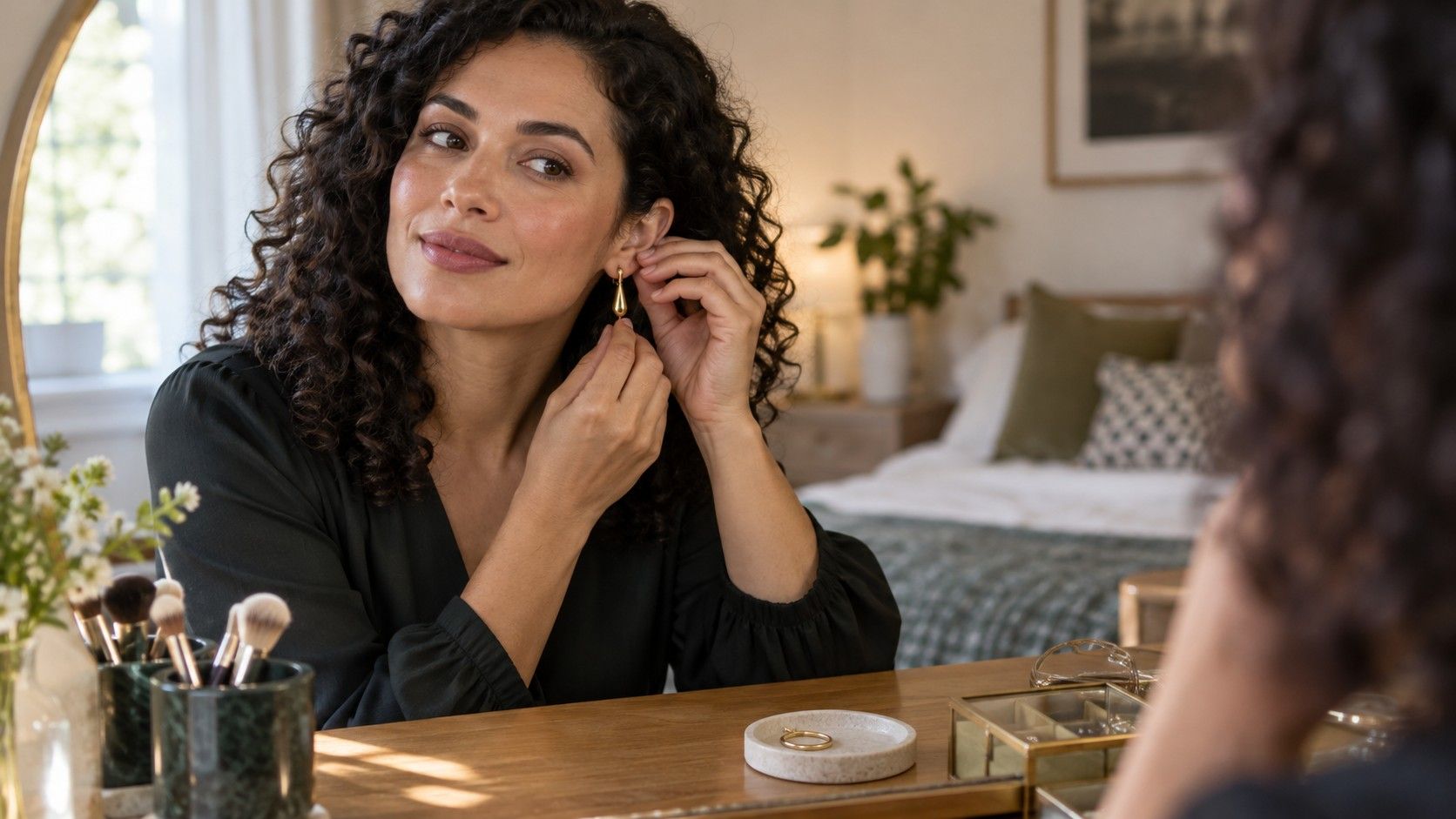
A close selfie is a frustrating starting point. The phone may sit above your eyes, your chin may be tilted, and the closest features can look more prominent than they do in the mirror. Use a level mirror first. Pull your hair away from the sides, let your shoulders relax and look straight ahead without lifting the chin. You want a familiar resting face, rather than the expression you use for photographs.
For a photo record, place the camera farther away and crop the image afterward. Keep it around eye level and use even light across both sides of the face. A timer can help you avoid reaching forward or turning toward the screen. Do not switch between an overhead selfie and a level portrait while comparing proportions: changing the view can explain the apparent change in shape.
I would keep one clear front view and a second image taken on another occasion under similar conditions. If the same outline appears in both, it is a more useful reference than a dramatic photograph chosen because it seems to prove a label. A slight turn is useful later for seeing the jaw, but it should not replace the front view when judging overall length and width.
Compare overall length before inspecting your chin
Look at the distance from the visible hairline to the chin, then at the widest part of the face across the cheeks. A round outline tends to give a more compact impression, with width and length feeling relatively close. An oval outline tends to look longer, even though its sides and chin may be just as curved. These are descriptive tendencies, with plenty of room between them.
A ruler can help you keep track of what you are comparing, but it does not supply an official border between categories. Hairline position can be hard to identify, especially with a fringe, a widow’s peak or an uneven edge. If you mark approximate points on a copy of your photo, write down where you put them. Otherwise a different starting point can produce a different answer without anything about your face having changed.
Avoid measuring the hair itself. A high bun, lifted roots or a rounded bob can change the outline you see from across a room, but those shapes belong to the hairstyle. Compare the visible face with the hair pulled back first; then release it and notice how the overall impression changes. That second observation may matter more for your actual styling decision than the label.
Follow the sides from cheeks to jaw
Now look at the route from the cheekbones down toward the chin. In a round-looking outline, the side often reads as a continuous curve through the cheek and lower face. In an oval-looking outline, there is usually more visible length along that route and a gradual narrowing below the widest area. Neither requires a pointed chin. A rounded chin can sit comfortably within either description.
Keep cheek fullness separate from the whole outline. Full cheeks can draw your attention sideways even when the face is visibly longer than it is wide. Equally, a narrower-looking cheek area does not automatically make an outline oval. Trace the outer edge loosely with your eyes, following both sides, rather than judging the brightest part of the cheek or the shadow beside the nose.
A smile is another useful comparison, provided you do not compare a smiling photograph with a resting one as if they show identical conditions. Smiling changes the cheek area and can make width more noticeable. Look at both expressions if you like, but use the relaxed view for your basic notes. Your everyday appearance includes movement; a category based on one frozen expression will always leave something out.
Use the comparison to answer the question you came with
The table below gives you observations to record, rather than a scoring system. If you see features from both columns, keep them. The purpose of deciding whether you have an oval or round face shape is to describe proportions clearly enough to try something useful, not to pass a classification test.
| What you see | More round-looking | More oval-looking |
|---|---|---|
| Overall impression | Compact, with width readily noticeable | More length visible through the face |
| Sides below the cheeks | A continuous, relatively broad curve | A gradual narrowing over a longer outline |
| Chin | May be softly rounded | May also be softly rounded |
| Useful next check | See whether hair adds width beside the cheeks | See whether crown height adds more length than you want |
For glasses, start with bridge comfort, lens position and a frame width that stays comfortable at the temples. Once those work, compare outlines. A rectangular frame may add a clearer horizontal edge; a rounded frame may echo the curves you already see. Either can be a deliberate choice. There is no need to reject a comfortable pair because a face-shape chart assigns it to a different column.
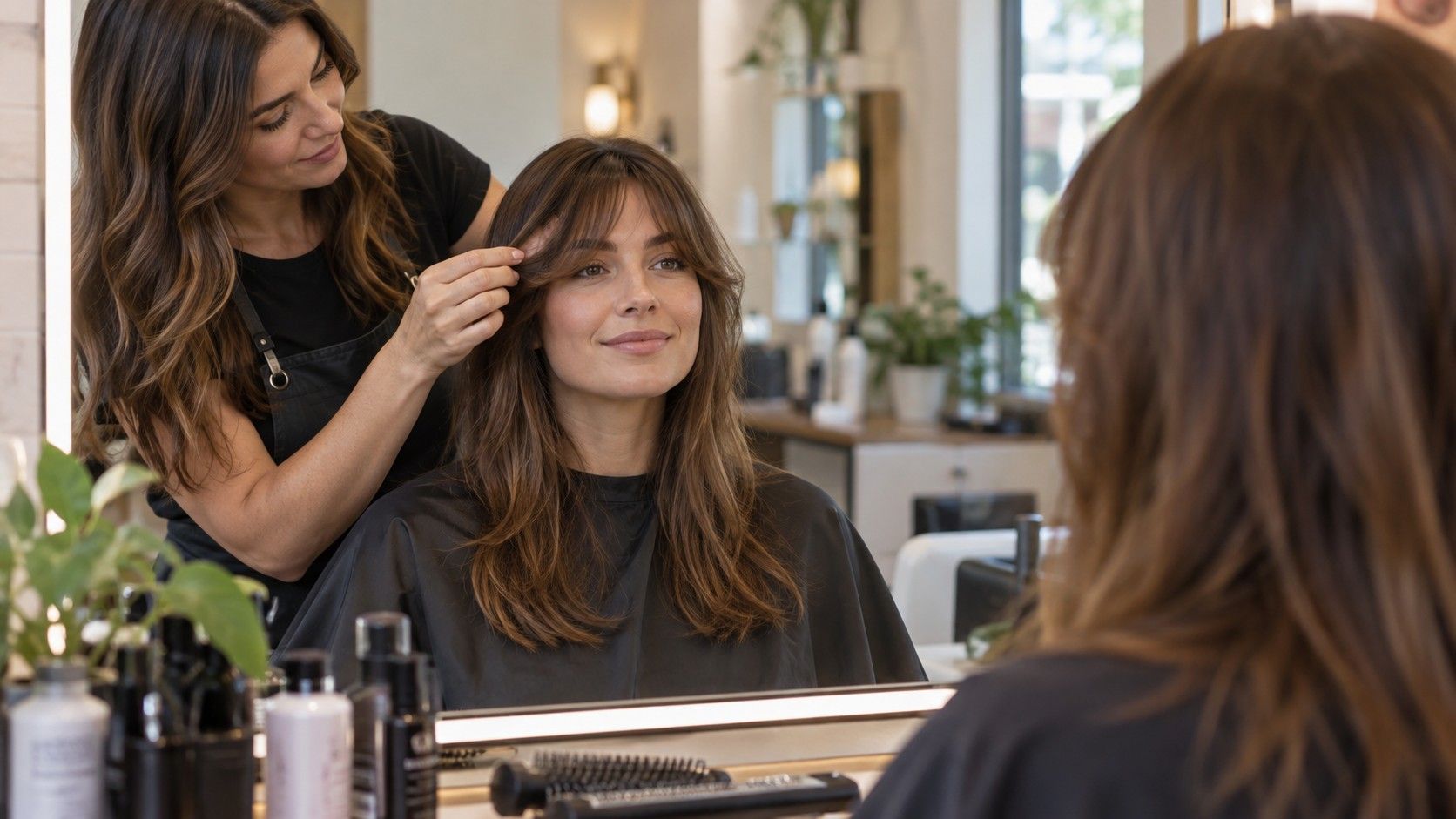
At a haircut consultation, translate the observation into placement. Say that you like volume near the crown but want less beside the cheeks, or that you want a fringe to interrupt the visible length of the forehead. Those requests give the stylist something concrete to discuss alongside hair texture, growth direction and the time you spend styling. The word “oval” by itself provides much less information.
Try a change without committing to a new haircut
Before cutting a fringe, move the front sections of your hair forward and pin them temporarily to see how reducing the visible forehead changes the impression. Before asking for a taller style, lift the roots gently and compare the front view. These are rough previews, not promises of a finished haircut. They help you notice where you prefer height, width or an open area around the face.
Change one thing at a time. If you alter the part, add crown volume and tuck both sides behind your ears at once, you will know whether you like the whole result but not which adjustment made the difference. A quick photo of each version, using the same angle, is easier to compare later than a memory of several mirror experiments. Keep your natural texture in the test wherever possible.
Consider the ordinary day as well as the best photo. A cut that needs daily heat styling may not suit the way you want to get ready. A frame that looks appealing in a still image still needs to stay in place when you read or move. Face shape can guide an experiment; maintenance, comfort and your own response determine whether it is worth keeping.
Keep a useful description when the answer is mixed
You may finish with “rounded jaw, full cheeks, a little more length than width.” That is a perfectly workable result. Round and oval are neighboring descriptions, and a face does not have to sit cleanly inside either drawing. If different charts give different answers, compare their pictures and starting points before assuming you have missed something obvious.
Write down three observations and one styling preference. For example: curved jaw, widest across the cheeks, moderate visible length; prefer some hair near the temples. Add a photo you recognize as representative. Bring that combination to a consultation or use it when trying frames. It remains useful even if you later choose a different label.
Stop checking once the comparison has helped you make the decision at hand. You do not need a new measurement every time a photograph looks different. For round vs oval face questions, the strongest practical answer is often a description of where you want volume, where you want openness and what feels comfortable when you wear it.