Oval and oblong descriptions overlap because both can have a face that is longer than it is wide. The distinction becomes useful when you are deciding where to put hair volume, whether to try a fringe, or how a pair of glasses sits within the outline. For an oblong vs oval face comparison, look at the overall impression of length alongside the forehead, cheeks and jaw. A decimal from a tape measure will not choose your haircut.
Compare the whole outline before measuring its parts
An oval face is commonly described as a longer-than-wide outline with gradual curves and a lower face that narrows toward the chin. Oblong is generally used when length is the more noticeable feature, often with sides that look relatively straight. These are loose styling descriptions. There is no single numerical cutoff that turns one into the other.
Pull hair away from the forehead and sides, then look straight ahead with a relaxed expression. Notice the space from the hairline to the chin, but also the transitions beside the cheeks and jaw. Does the outline have an obvious elongated impression, or do its curves make the length feel less dominant? You can answer “somewhere between” without making the exercise useless.
Do not assume that every long face shape has the same jaw. A long outline can have a rounded lower face, a more angular jaw or a narrow chin. These details may matter more than the broad label when you compare a blunt bob with a layered cut. Keep a separate note of them instead of asking “oblong” to explain everything.
If you use a tape or a photograph to compare dimensions, use it as a consistency check. Hairline placement and the point chosen for cheek width can shift the result. Repeatedly measuring until a preferred ratio appears adds confidence without adding clarity. The useful observation is that length stands out, not that your face passed a geometry test.
Check the camera before you call your face longer
A photograph from above, below or very close range can change how the forehead, cheeks and chin relate to one another. A head tilted upward exposes the lower outline differently from a level head. When one picture looks oval and another looks much longer, camera position is worth checking before you change your styling plan.
Take a straightforward reference photograph with the camera around eye level and some distance from your face. Face it squarely, keep the hairline and chin within the picture, and crop afterward. Avoid filters that reshape the face. A front-facing view with soft, even light makes the boundary easier to compare than a dramatic shadow across one side.
Use a mirror as another reference. Turn slightly to understand the jaw if you wish, then return to the frontal view for the shape comparison. A three-quarter portrait can look appealing while being a poor basis for judging face width. It shows different amounts of each side by design.
Also check what is framing the face. Hair piled high, a centre part with flat sides, or a beard extending below the chin can add visible vertical emphasis. Those are features of the current silhouette. They do not mean your underlying outline has suddenly changed, and they are often easier to adjust than a label suggests.
Decide whether you want to emphasise length or soften it
Length is a feature you can choose to echo or reduce visually. If you like a tall, open silhouette, crown volume or a swept-back style may support that preference. If you want less vertical emphasis, explore some volume at the sides and less height on top. Neither goal needs to be presented as a rule for everyone with an oblong face.
Before cutting anything, arrange your existing hair in different ways. Flatten the crown slightly and release the sides; then reverse the arrangement. Take a picture from the same position each time. The comparison will be imperfect, but it can show whether your preference concerns height, exposed forehead or how close the hair sits beside the cheeks.
| Your styling goal | A useful experiment | What to check |
|---|---|---|
| Less vertical emphasis | Lower crown volume and loosen the sides | Whether the side shape lasts without constant restyling |
| More visible length | Try an open forehead or some height | Whether you enjoy the complete silhouette |
| More forehead coverage | Compare a fringe or a swept section | Growth direction, comfort and daily upkeep |
| More presence near the eyes | Compare frame depth and upper-rim detail | Bridge fit and cheek clearance |
| A practical everyday cut | Show how your hair falls without styling | Texture, density and the time you want to spend |
Side volume is not one fixed hairstyle. It might come from a wave, a rounded cut or the way layers sit. Fine straight hair and dense curls respond differently, so a reference picture is the start of a conversation. Ask where the shape will sit after your ordinary wash and drying routine, not just after a salon finish.
Choose a fringe by the morning it requires
A fringe changes how much forehead is visible and can interrupt a long vertical outline. That makes it a useful option to explore for both oval and oblong faces. It is not compulsory. If you dislike hair near your eyes or usually pull everything back, the daily inconvenience may outweigh the visual change.
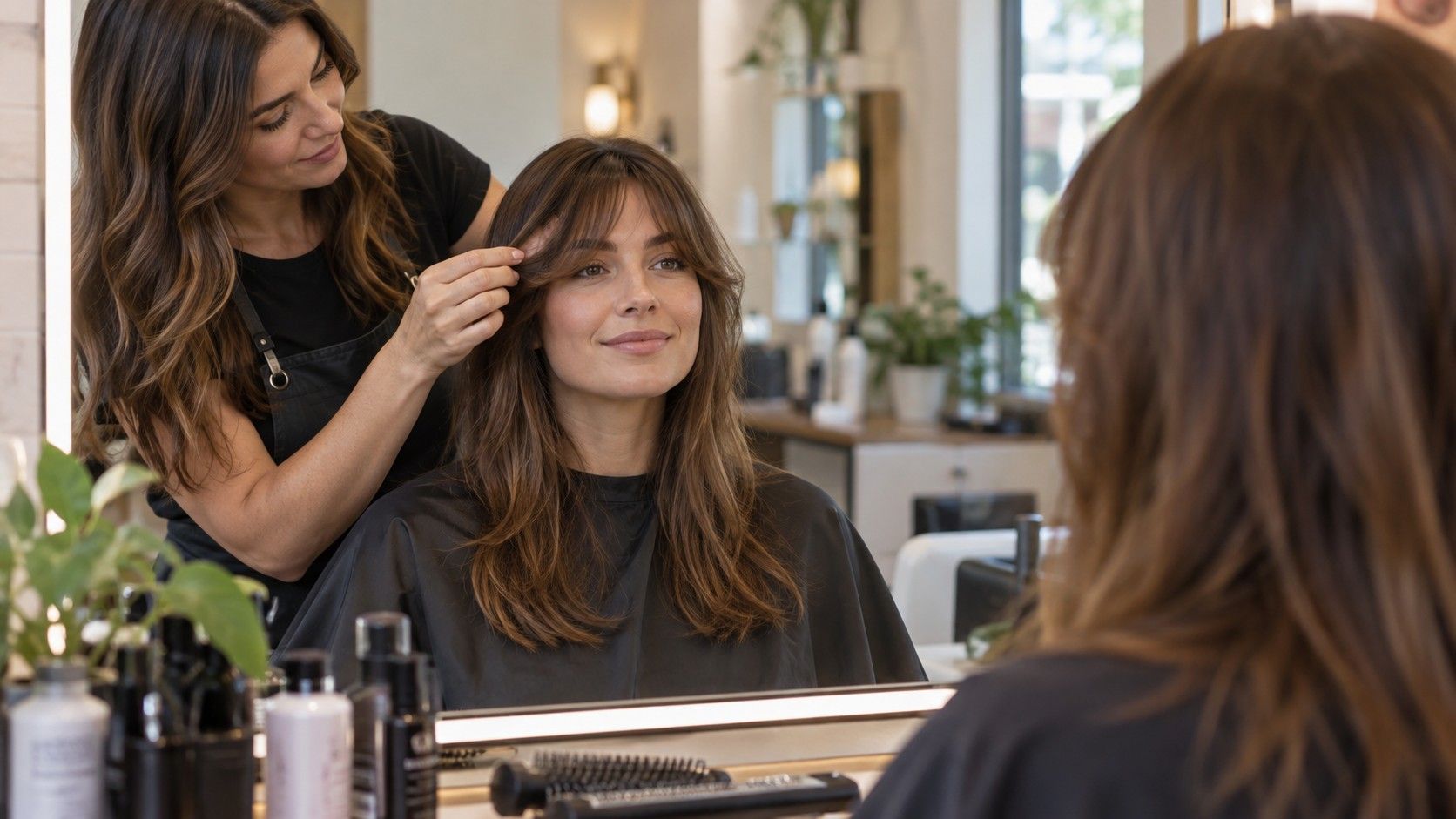
Compare a fuller fringe with a softer swept or divided version in reference pictures that resemble your hair texture. Pay attention to where it starts, how much forehead remains visible and where the ends sit beside the face. The term curtain bangs covers many different lengths and amounts of coverage; a name alone does not tell a stylist what you want.
Hair growth direction matters at the front. A strong part or a cowlick may make a straight fringe separate, and curly hair can sit differently when dry. Discuss the intended dry shape and the amount of styling involved. Do not infer that a fringe will fall like a photograph simply because the person in it has a similar outline.
A temporary arrangement can help you judge coverage, though pinned hair will not behave exactly like a cut fringe. Use it to answer the limited question of whether you like the forehead partly covered. Then make the cutting decision with the practical details in view: trimming, drying, exercise, glasses and how you wear your hair away from your face.
Look at glasses and facial hair as part of the outline
Frames occupy a visible horizontal area around the eyes. If you want more presence there, compare a somewhat deeper lens shape or a clearer upper rim with a shallow, discreet frame. Keep the fitting conditions similar. Oversized frames and correctly sized frames differ in more than their shape, so comparing them can lead to the wrong conclusion.
Check whether your eyes sit comfortably within the lenses, the bridge stays put and the lower edge clears your cheeks when you smile. Frame width, bridge design and temple pressure are practical concerns that a face-shape label cannot solve. A deeper frame may give the visual effect you like while fitting poorly; keep looking for the effect in a better-fitting size.
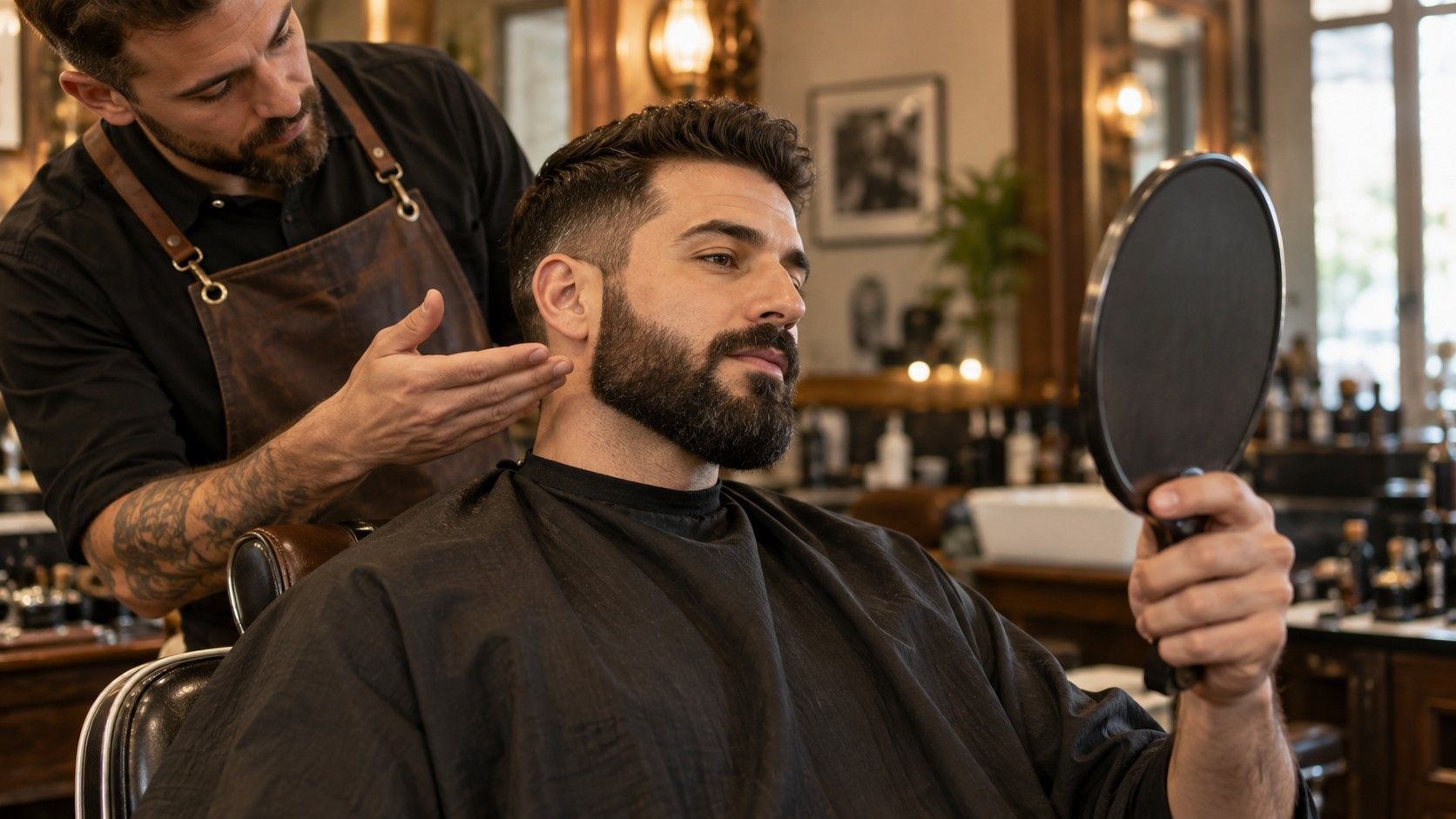
If you wear facial hair, assess the complete silhouette with it in place. Extra length below the chin can extend the vertical impression, while shape along the sides changes the lower outline. Whether you want that emphasis is a matter of preference. Beard density and growth pattern also limit which reference styles are realistic.
Make these comparisons in your usual clothes and hairstyle when possible. A high collar, hair covering the sides and a bold frame can work together in the mirror. You do not have to isolate your bare face every time you buy something. The underlying proportions are one reference; the person wearing the finished combination is the actual subject.
Keep the useful detail when the label remains uncertain
You may end up with “long oval” rather than a decisive oval or oblong result. That is a workable description. Add what you noticed: relatively straight sides, a narrow chin, a broad forehead or cheeks that carry the width. These details describe why a particular cut or frame interests you more clearly than a category on its own.
When visiting a stylist, take a picture of your ordinary hair alongside the style you like. Explain whether you want to show the forehead, keep volume away from the crown, or have a fringe that can be pushed aside. Ask how the reference would translate to your texture and routine. The answer should be specific enough to picture on a normal weekday.
There is no need to make length disappear unless that is your preference. Use the oblong vs oval face distinction to narrow an experiment, then judge the result by how it feels and behaves. A comfortable pair of glasses or a haircut you can maintain has done its job even if the label stays approximate.