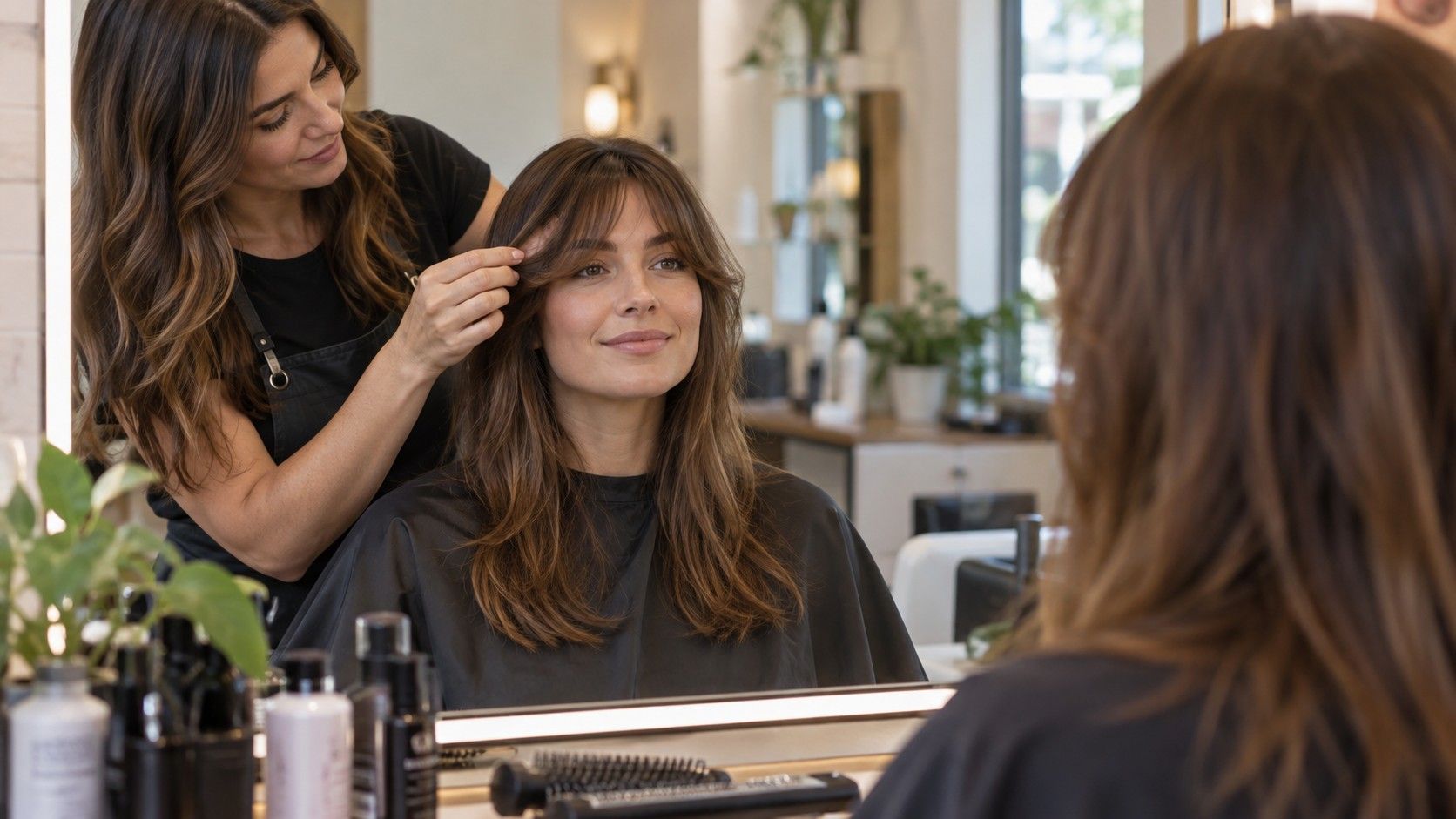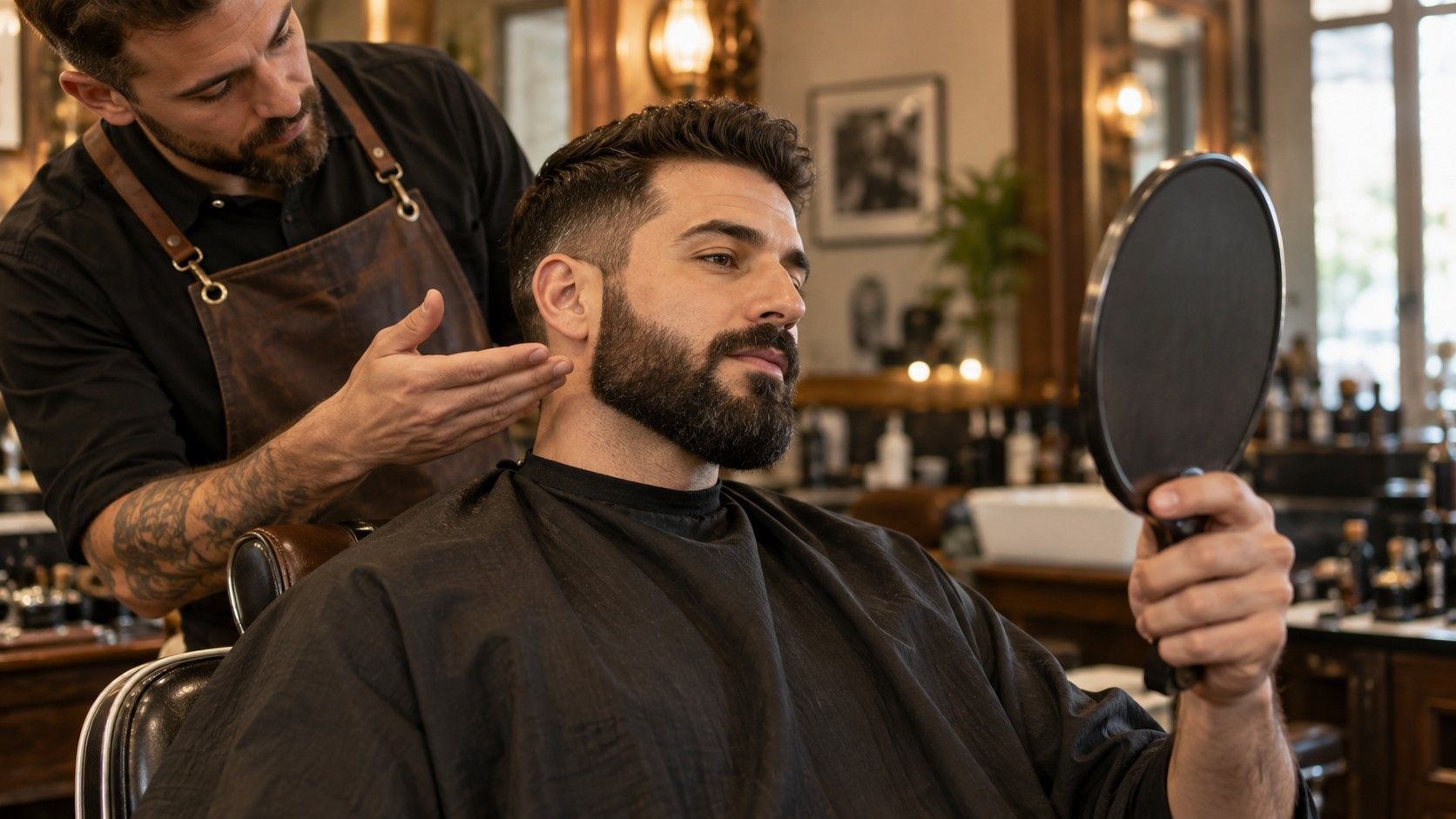
A pointed chin can make heart and diamond faces look almost identical in a quick sketch. The useful difference is usually higher up: how the forehead compares with the cheekbones, and where the outline begins to narrow. If you are deciding between a diamond or heart face shape, start with a clear view of those transitions. You do not need to squeeze your face into a perfect diagram before choosing glasses or a haircut.
Start with the forehead and cheeks in the same view
In common styling descriptions, a heart face has a relatively broad upper outline that narrows toward the chin. A diamond face is described with the cheekbones as the clearest wide point, with a narrower forehead and lower jaw. Both can have a tapered chin. That shared detail explains much of the confusion, but it cannot settle the comparison on its own.
Pull your hair away from the temples and look straight ahead in a mirror. Compare the visible width above the eyebrows with the span across the outer cheeks. Pay attention to the outline rather than a bright patch of light on a cheekbone. Side lighting can make one cheek look more prominent without changing the face's actual boundary.
For a heart vs diamond face comparison, ask where the outline feels broadest when you trace it slowly from the temples downward. Does it begin broadly and gradually taper? Or does it move outward toward the cheeks before turning inward again? The second pattern is closer to the conventional diamond description. If the forehead and cheeks look similar in width, a mixed description may be the most useful result.
A neutral expression helps. A wide smile lifts the cheeks, while a tense jaw changes the lower outline. There is no need to keep your face unnaturally still; simply compare like with like. A relaxed mirror view and a relaxed photograph are a better pair than a smiling holiday photo and a tightly cropped selfie.
Check whether your hairline is making the decision for you
The word heart invites people to search for a literal heart-shaped hairline. A widow's peak can suggest that picture, but it is not a requirement for the styling label. Someone can have a broad forehead, a tapered lower face and a rounded hairline. Equally, a central point at the hairline does not automatically make the whole face heart-shaped.
Separate the hairline's path from the width of the forehead beneath it. Look at the sides near the temples, then at the upper forehead. Hair growing forward at the corners can hide width; a tight ponytail can reveal an area that is usually covered. Neither view is dishonest. They answer different questions about your underlying outline and your usual appearance.
Try your everyday part after the hair-back check. A side part, curls at the temples or a straight fringe may change the upper silhouette substantially. If your aim is to buy frames you will wear with that hairstyle, this second view matters. The uncovered outline is a reference, not a demand to style your hair away from your face.
Receding corners or an uneven hairline also make a literal geometric match less helpful. Do not redraw the forehead into an imagined ideal. Record what you can see, including the uncertainty: broad upper face with cheek emphasis, for example. That observation gives a stylist more usable information than an emphatic label built around one small point of hair.
Use the chin to confirm the taper, not to name the shape
Look at the path from each cheek toward the jaw and chin. With both heart and diamond descriptions, the lower outline commonly becomes narrower. A narrow chin supports that observation, but a pointed chin appears in many combinations of facial proportions. It tells you about the bottom of the outline, not necessarily its widest part.
The angle of the turn is worth noticing. Some faces narrow in a fairly continuous line from the upper face. Others have a clearer outward cheek area followed by a more noticeable inward change below it. Soft tissue, expression and lighting affect how sharp that transition looks, so avoid treating a shadow under the cheekbone as a measurement.
| What you notice | Closer to a heart description | Closer to a diamond description |
|---|---|---|
| Upper outline | Forehead looks broad relative to the lower face | Forehead looks narrower than the cheek area |
| Widest visible span | Upper face or a similar forehead and cheek span | Cheekbones are the clearest wide point |
| Lower outline | Narrows toward the chin | Narrows below the wide cheek area |
| Pointed chin | Can be present | Can be present |
| Widow's peak | Not required | Does not rule this description out |
Read the table as a set of comparison cues. It is not a scoring system. If one side describes your forehead and the other describes your cheeks, keep both observations. There is no practical prize for getting every row into the same column.
Repeat the comparison when a selfie looks different
A close phone camera can change the apparent relationship between the centre of the face and its outer edges. A tilted head adds another complication: the upper face and jaw are no longer being viewed from the same angle. Before switching your conclusion from heart to diamond, check how the picture was taken.
Use an eye-level camera, face it squarely and keep some distance instead of filling the screen from close range. Crop the image afterward if needed. Keep the whole forehead and chin visible. The goal is a consistent reference image, not a polished portrait, and a mirror comparison remains useful alongside it.
Leave filters and portrait reshaping off. Check the outline on both sides, since a small turn can expose one cheek and hide the other. If one side appears much wider, inspect whether an ear, a curl or a shadow has become part of the boundary you are tracing. Do not average unrelated photographs into a supposedly exact result.
If clear views still disagree, stop chasing a definitive answer. You may sit near the overlap between these descriptions. A note such as “cheekbones slightly wider than forehead, narrow chin” is stable enough to guide a fitting even when an app or diagram supplies a different name.
Try frames and hair around the area that actually concerns you
Once you know where the width sits, use that information to make a small styling experiment. If you want more visible framing near narrow temples, try a frame with some presence along its upper edge or hair that sits around that area. If you enjoy showing prominent cheekbones, keep the sides open and see whether that suits your taste. Neither choice is a correction you owe your face.
Glasses need a physical fit check before a shape verdict. Watch for cheeks touching the lenses or lower rims when you smile, temples pressing at the sides, and a bridge that slips. A frame can look convincing in a face-shape chart and still be uncomfortable. Compare a few frame outlines in similar sizes so that width and fit do not masquerade as a preference for one shape.
For hair, compare the same part with the temple area tucked back and then released. This shows what side volume does without committing to a cut. A fringe may change how broad or visible the forehead appears, but its everyday behaviour depends on hair texture, growth direction and how much styling you want to do. Bring those details into a salon conversation.
Change one feature at a time. Large earrings, a new fringe and bold frames in the same photograph make it hard to tell what you liked. A pair of ordinary comparison pictures, taken under similar conditions, can be more useful than a folder of heavily styled examples with very different hair.
Keep a description you can use tomorrow
The best result is a short, concrete description: broad forehead tapering toward the chin, or cheekbone-led width with narrower temples. Add “heart-like,” “diamond-like” or both if the terms help you browse. They are convenient styling categories rather than fixed instructions about what you should wear.
If you are choosing between two haircuts, explain the actual goal. You might want hair clear of your glasses, more coverage at the temples, or a cut that needs little work in the morning. Those requests remain understandable even when you and the stylist use different names for the same face.
Return to the comparison only when it serves a decision. You do not need to reassess your shape every time a photograph looks unfamiliar. Keep the widest point, the forehead-to-cheek relationship and the lower taper in mind, then judge the finished choice by comfort, maintenance and whether you like seeing it in the mirror.