Choosing glasses for face shape can be a useful way to narrow a crowded display, but a shape chart cannot tell you whether a bridge will slip or a frame will press at the temples. Start with pairs that sit comfortably and suit your lenses, then compare the lines you like. You can echo the curves of your face, add a straighter edge or make the frame the most noticeable feature. The best choice is one you still enjoy after the first look in the shop mirror.
Start with a frame you can actually wear
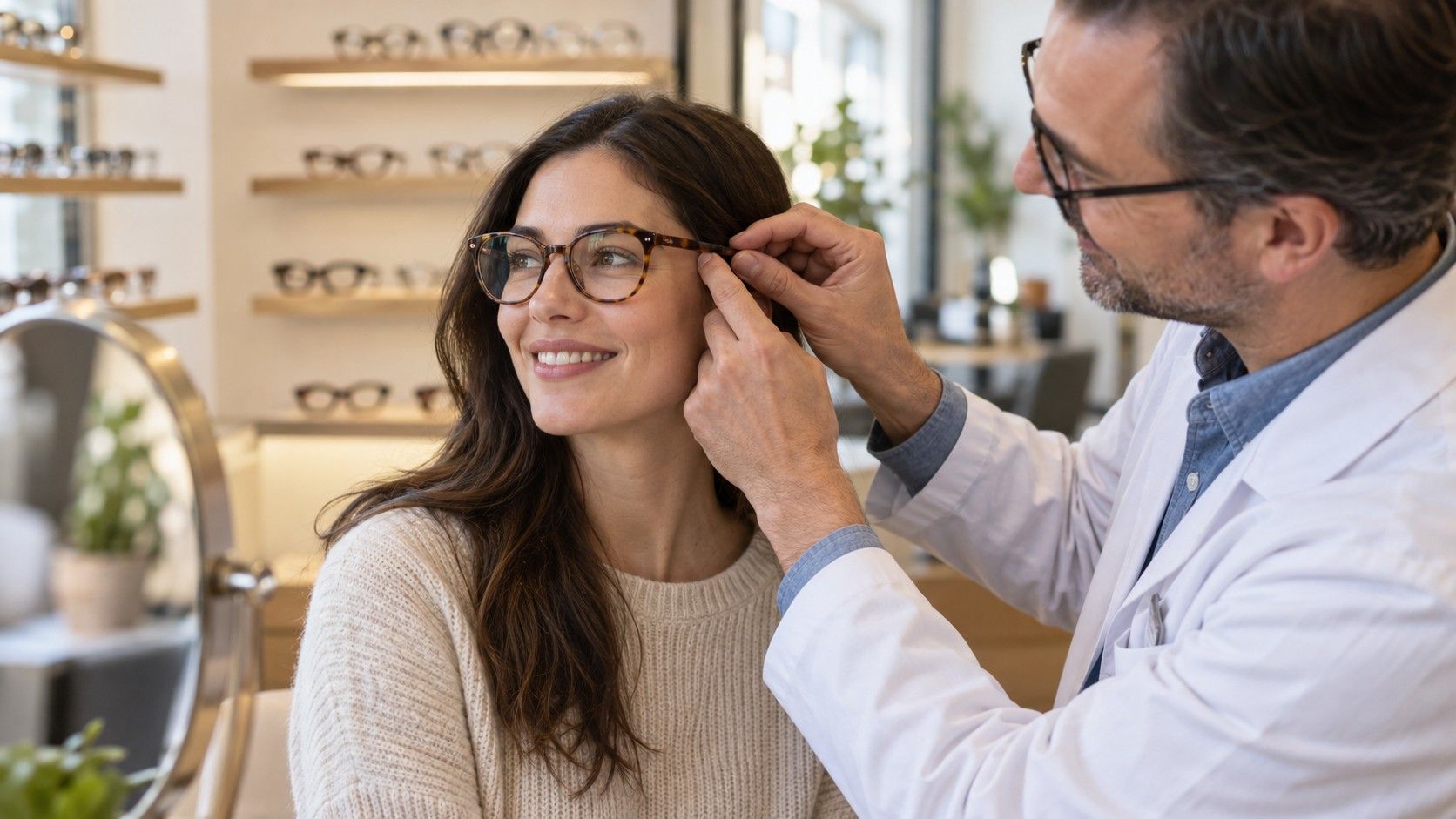
Put the frame on normally and let go of it. Notice where it rests instead of pushing it into the position you hope it will keep. Does the bridge feel supported? Are you immediately lifting the frame up your nose? Do the sides press or feel loose? These observations give an optician a useful starting point. They are more informative than deciding that a round frame belongs to one face category.
Wear the pair for a little while as you look at other options. An instant mirror check can miss a contact point that becomes distracting. Look down, turn your head and return to your usual posture. If the frame moves or feels uncomfortable, show the optician what happens. Some fit issues can be adjusted; others may call for a different bridge or frame design. Ask before assuming the pair will settle into place after purchase.
Your lens requirements belong in this conversation early. Tell the optician how you use your glasses and bring your current prescription details as requested. Frame size and design can affect what is practical for the finished pair. The demonstration lenses in a display frame are not the final lenses you will wear, so do not rely on the display frame alone to predict the complete result.
Compare width without using a face-shape formula
From the front, notice how far the frame extends beyond the visible sides of your face and whether the sides appear to pull outward. Then check comfort at the temples. A frame can look close to the width you want while fitting poorly, or feel comfortable yet create a deliberately oversized appearance. Describe both the fit and the visual effect instead of treating them as the same judgment.
Numbers printed inside an existing frame can help an optician find a starting size, but they do not guarantee that another design will fit identically. Bridge shape, material and the way the front curves all contribute to how it sits. Bring a pair you find comfortable, even if you want a different style. It offers a concrete reference for what works and what you would like changed.
Try nearby sizes of the same design when available. It is easier to notice the effect of width when the color, rim and lens shape stay consistent. If you compare a small wire oval with a large dark rectangle, several things change at once. That can be fun for exploring, but it makes the reason for a preference harder to identify.
Decide whether you want contrast or repetition
Face-shape advice often starts with contrast: angular frames for a round-looking outline, curved frames for a more angular one. Treat that as one experiment. Straighter lines can introduce an edge near the eyes; rounded lines can repeat curves already present. You may enjoy either effect. There is no requirement to make your face appear longer, narrower or closer to a different category.
| If you want to try | Compare these details | Keep this similar |
|---|---|---|
| A clearer horizontal line | A straighter upper rim and a curved upper rim | Frame width and overall size |
| A softer outline | Rounded corners and sharper corners | Rim thickness and color |
| More emphasis near the brows | A stronger upper rim and a quieter one | How high each frame sits |
| A less noticeable frame | Lighter visual weight and a bolder rim | Comfort and lens suitability |
An oval-looking face does not make every pair equally comfortable, and a square-looking face does not rule out a square frame. Mixed outlines are common enough that a rigid chart may not even offer a convincing starting box. Focus on the effect of the actual pair. Is it the upper edge, the corner, the color or the amount of lens area that you like?
If you search for the best frames for face shape, save images for the frame details rather than for a promise that the same pair will transform your appearance. A model’s hair, expression, camera angle and frame size all influence the picture. Use the image to explain a preference in the shop, then assess the real fit on your own face.
Check the brows, cheeks and lens position together
Look at where the upper rim sits relative to your brows. You may prefer it to follow their line, sit clearly below them or create a stronger shape of its own. Avoid turning that preference into a mandatory rule. Raise and relax your brows and check your resting expression. The frame should be judged as something you wear while moving and talking, not only in a carefully arranged photograph.
Smile naturally and notice whether the lower rim touches your cheeks or is lifted by them. Look down again and see whether the frame moves. If contact feels distracting, ask the optician to assess the fit and possible alternatives. A different bridge design or frame shape may change the relationship, but you should not have to guess which adjustment is appropriate.
Ask the optician to check pupil position and the measurements needed for your lenses. A simple rule about placing every pupil at the exact visual center of every lens shape is not a substitute for fitting. Lens design and how the frame sits are part of the decision. You can choose the appearance you like while leaving those specific measurements to the fitting process.
Use the fitting room as a controlled comparison
Choose a small shortlist rather than trying to remember the entire display. Give each pair a clear description: narrow dark rectangle, light rounded metal frame, broad translucent rim. Compare two at a time in the same mirror and light. When one drops out, identify why. “The upper rim feels too heavy” helps with the next choice more than “it does not suit my face.”
If photographs are allowed, take a level front view from a little distance and crop afterward. Keep the expression and camera position similar for each pair. A close selfie can change proportions, so use the photo alongside the mirror rather than letting it overrule everything you see and feel. Also look from the side: a frame has depth and temples that disappear in a straight-on picture.
Wear your hair as you normally do, and briefly try any common alternative, such as tucking it behind your ears. If you alternate between contact lenses and glasses, consider the situations in which this pair will be used. The frame should make sense with the routine you actually have. A dramatic pair chosen for occasional wear and an everyday pair may reasonably follow different preferences.
Keep returning to the physical fit as the shortlist gets smaller. An appealing color can make it easy to overlook slipping, while a comfortable pair can seem visually quiet beside several bold options. Ask for help checking the finalists and explain what you like about each. You may find the preferred design in another size or finish, though availability will depend on the shop.
Make the final choice around the finished pair
Before ordering, confirm the frame, color, lens choices, cost and what fitting or adjustment is included. Ask about the shop’s policy if the completed glasses need attention after collection. These details are worth checking while both finalists are still available. A face-shape recommendation tells you nothing about what is included in the purchase.
At collection, allow time for the optician to check the completed glasses on you. Explain any slipping, pressure or concern about their position. The frame with your lenses deserves its own fitting check, even if the display version seemed comfortable. If something still feels wrong after an adjustment, describe the specific issue instead of assuming it must be a consequence of your face shape.
For a future purchase, keep the frame model and a short note about what you liked or disliked. Comfortable bridge, quieter brow line, sides that stay in place: those are reusable observations. The face-shape label may help you browse, but the record of a pair you enjoy wearing gives you a far more useful starting point next time.